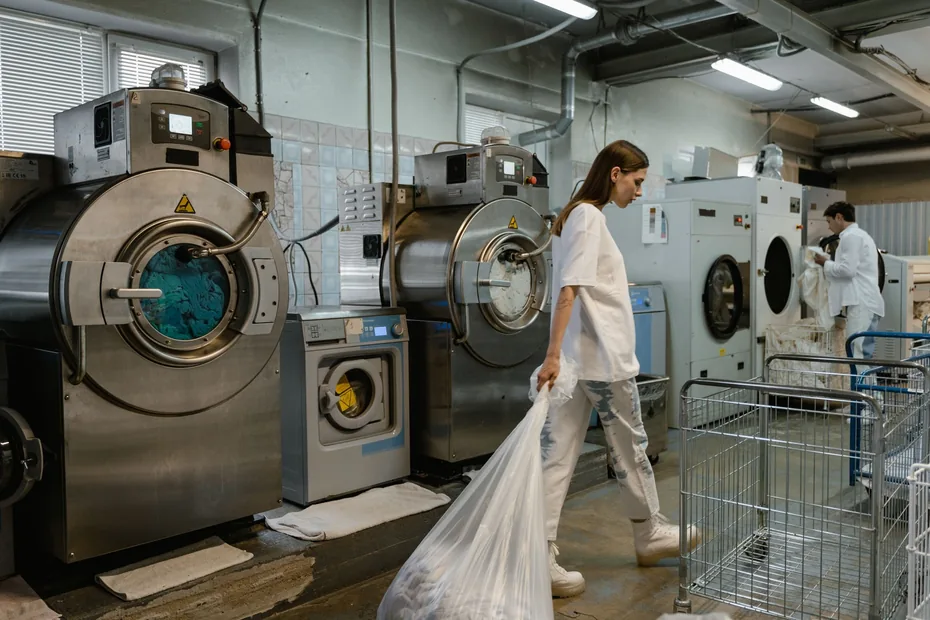
Smart Laundry RFID manages linen and laundry operations with RFID for hospitals, hotels and commercial laundries. Every item is registered against a wash-durable RFID tag and read at each change of hands — receiving, issue, delivery, return and washing — so quantities and status are known in real time instead of being counted by hand.
Signs the Linen Operation Has Hit Its Limit
- Linen goes missing and nobody can say at which step.
- Stock is out of date — the figure on file does not match the shelf.
- Returns are wrong or late, past the agreed turnaround.
- Duplicated effort — recounting because the totals disagree.
- Chasing several departments to assemble one set of numbers.
- Technology is in place but is not being used to its potential.
What changes once RFID is in place
- Fewer lost items.
- Faster delivery turnaround.
- Copes with a growing number of users.
- Item status can be checked at any time.
- Data to plan and decide with.
- Staff work with better tools.
Can You Meet These Demands Today?
- Current technology that makes the operator's job easier.
- Track the status and quantity of every batch delivered.
- Screen, sort and review the history of each item.
- Save time on counting and verification.
- Report results in real time.
The Eight-Status Linen Cycle
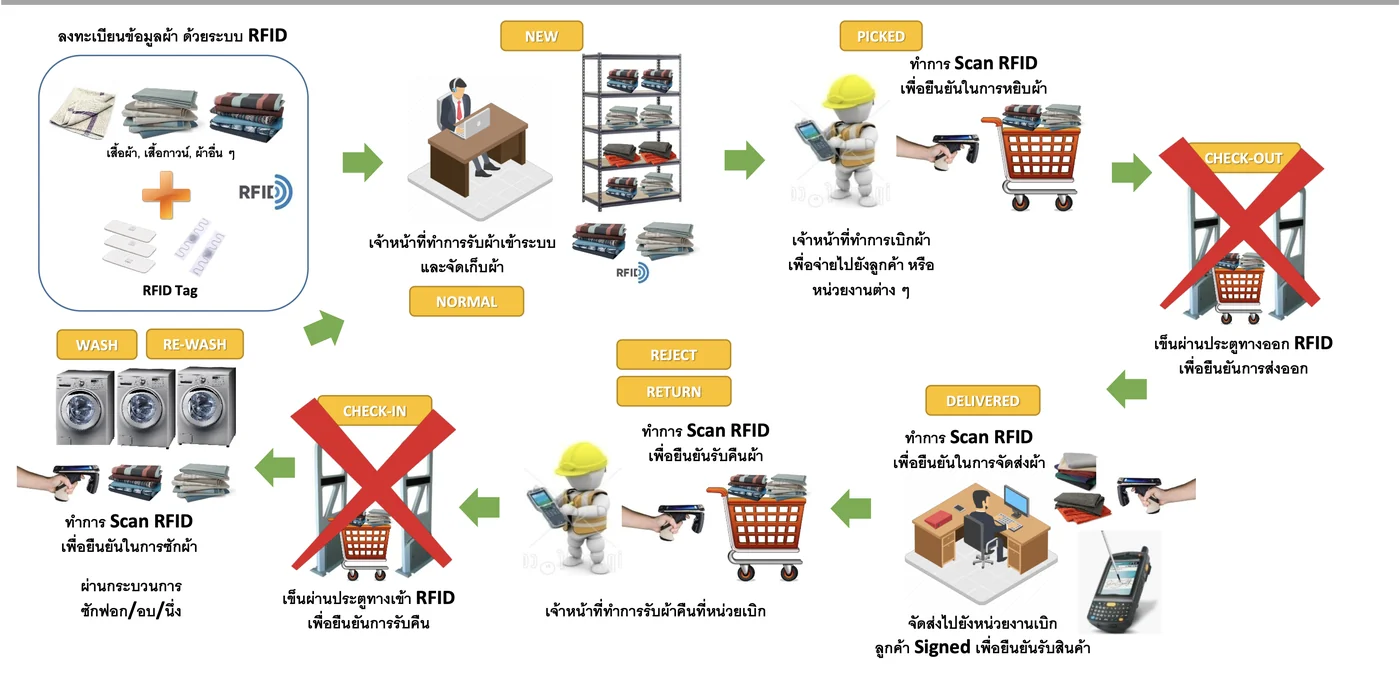
- NEW — Staff receive linen into the system and store it, after registering each piece against an RFID tag.
- PICKED — Scan RFID to confirm picking, when issuing to a customer or a ward.
- CHECK-OUT — The trolley rolls through the outbound RFID portal and despatch is confirmed automatically.
- DELIVERED — Scan RFID to confirm delivery to the requesting unit, with the customer signing for it.
- RETURN / REJECT — Scan RFID to confirm the return at the requesting unit, separating items needing a re-wash.
- CHECK-IN — The trolley rolls through the inbound RFID portal and the return into stock is confirmed.
- WASH / RE-WASH — Scan RFID to confirm washing; the linen goes through washing, drying and pressing.
- NORMAL — Processed linen returns to ready-to-use status and re-enters the cycle.
Smart Laundry RFID Capabilities
- Register linen against RFID tags, linked to type, department and service history.
- Issue and receive with an RFID reader instead of counting by hand.
- Alert when items have been out longer than the agreed period.
- Screen and sort linen by the data held on the tag.
- Check remaining linen stock with an RFID reader at any time.
- Report by linen type, department and the cost incurred.
- See live data and analyse history to plan purchasing.
- Connect over WIFI and 4G, run on the cloud and integrate through an API.
Built on a Flexible Architecture
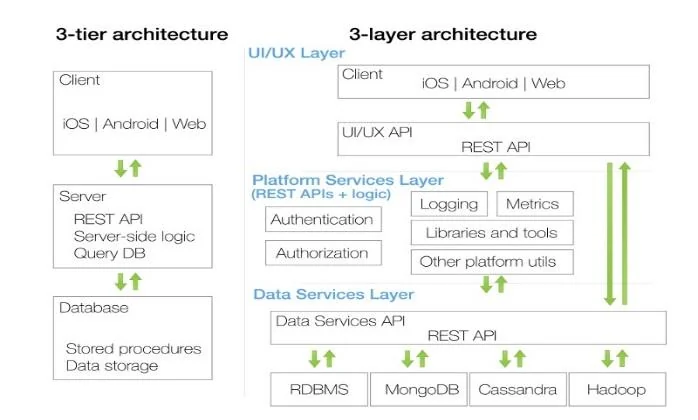
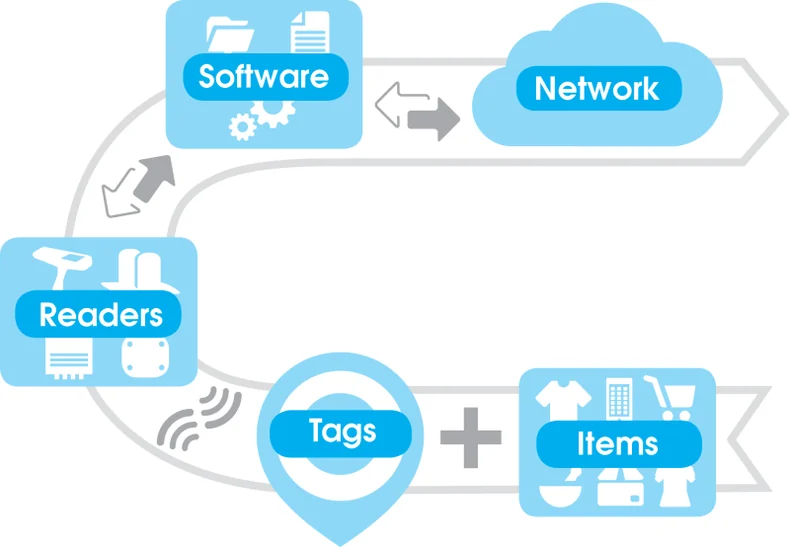
- A 3-tier architecture separating client, server and database.
- Three functional layers: UI/UX, Platform Services and Data Services.
- Usable from iOS, Android and a web browser.
- Layers talk over REST APIs, so the system can be extended and integrated.
Equipment used with the system — the wash-durable UHF laundry tag, the iData T1 UHF and iData T2 UHF handheld readers, plus RFID portals at the doorways. See the full range on the RFID systems page.
Linen Management FAQ
How is Smart Laundry RFID different from counting linen by hand or by barcode?
Counting by hand means unfolding every piece and recounting when the totals disagree; barcodes need line of sight and one scan per item. RFID reads many pieces at once without seeing the tag, so a whole trolley counts in one pass — and every read is logged with a timestamp and an operator.
Do the RFID tags really survive washing and hot pressing?
The tags are purpose-built for laundry: a silicone-encapsulated body rated IP68, sewn in or heat-sealed, good for 200+ wash cycles at up to 90°C including hot pressing and chemicals. Full specifications are on the UHF laundry tag page.
How does the system know linen has left or come back?
RFID portals at the doorways read every tag as a trolley rolls through and stamp CHECK-OUT or CHECK-IN automatically, with no need to stop and scan. Where a specific confirmation is wanted — picking or receiving back — a handheld reader does the same job.
Do we have to tag every piece? Where should we start?
You do not have to tag the whole hospital or hotel at once. Most sites start with the high-value or frequently-lost items — gowns, bed covers, uniforms — then extend to other linen once the process has settled. We survey your site and help sequence the rollout before you begin.
Can it connect to the systems our hospital or hotel already runs?
Yes. The system is built around a REST API, so issue, return and balance data can be pushed to other systems; it runs over WIFI or 4G and can be deployed on the cloud. The exact integration depends on the receiving system, which we assess during the site survey.
Want to know where the linen goes missing?
Let our team survey your laundry department and assess it free, before you commit.
0-2944-0817 Contact Us